 Jason Townes French
Making Electronics with Fable (Maybe LeCun is Right)

It was shortly after Fable had re-released that I decided to run the model of legends told through an electronics experiment. Despite the lukewarm sentiment surrounding the Opus lineage, Fable’s digital bloodline seemed to stand in a class of its own, garnering respect and awe from an industry desperate for another collective dopamine hit. It was another one of those classic AI moments where, seemingly overnight, Fable became a benchmark in itself for new models to compare against, but only for a few days, as pretty soon benches start popping up of other models purportedly scoring “better than Fable”. It’s all a dizzying cacophonous mess, but cacophony aside — Fable, in my opinion, does appear to be one of the few cases where the benches and the vibe checks match up. Anthropic appears to have cooked with this one. In my experience, Fable is a lot better and a lot more capable of getting serious stuff done than just about any other frontier model (unless you’re a Glasswinger using that primo uncut DoD Mythos inference 😛).
I've thrown games at it, flight simulators, shaders, sound generators, apps for just about every consumer platform, and it handles it all generally quite well (significantly better than what I was getting with scatter-brained, talks-a-lot-but-ain't-doin-much Opus).
So I figured I’d have some fun with this one: why not give it a shot at handling a task in the electronics realm?
For a mind helplessly hooked on programming like my own, electrical engineering is a fun way to take a break from managing bits for a bit, and manage voltage directly instead. My day-to-day programming tasks don’t require custom electronics. So it was time to make up some tasks that did.
One of my favorite scientists is Nikola Tesla. Amongst many feats, he’s known for this awesome idea that if you wish to understand the universe, think energy, frequency, vibration. Tesla is known for inventing a lot of seemingly random stuff, from motors, to death rays, and earthquake machines, but the through line that connects all of them is this idea that everything is frequency. Nothing can escape its own resonant frequency. Not a wine glass on a counter, nor a tectonic plate on the earth’s crust. From this you could extrapolate that understanding the nature and mechanics of frequencies is akin to understanding the nature and mechanics of reality itself.
So if everything is frequency,
then maybe I can generate my own little bit of everything,
by making a 9V battery-powered frequency generator.
So that's what I set out to do: a simple project where I build a simple electrical device that emits a relatively consistent signal (in this case, 29.5 kilohertz) in a relatively consistent geometric shape. I usually use sine waves when it comes to carriers, so to switch things up, I decided on a square wave this time. I would achieve this by using a timer chip, which outputs on a set interval, on and off, providing the basis of the square wave, and a series of resistors and capacitors to make sure that I'm getting just the right amount of voltage and frequency that I'm looking for.
So this is a relatively simple project that I can do easily on a breadboard. But I’m a man that enjoys soldering. So I figured, you know what? Let's go ahead and nerd out for this one and solder some stuff. Sure, I didn’t need to, but I wanted to. My soldering ain’t gonna solder itself. Plus if I could make this look somewhat nice, that would be cool too. Nothing that's going to win any design awards, but if it can at least be contained in a nice little project box, that would feel good. So I figured with this set of constraints, I could build this square wave generator within a perfboard that I could fit inside a project box.

“Great. Let’s give these requirements to Fable”, I thought to myself. Let's tell it what we're working with spatially. Let's tell it what we're hoping to achieve electronically, and let's see what it can get for us. I didn't want it to just output a wall of text. I wanted to actually get something that I could follow along with in a useful manner. So I asked it to create a graphical PDF, with diagrams showing all the steps, cross-referenced with a list of all the parts that would be needed. To my pleasant surprise, Fable did this really well. I was very impressed with its ability to not just list out all the parts, but actually give labels for each of them and then create a set of instructions along with a diagram using those same labels to explain step by step how to build everything, no obvious issues.
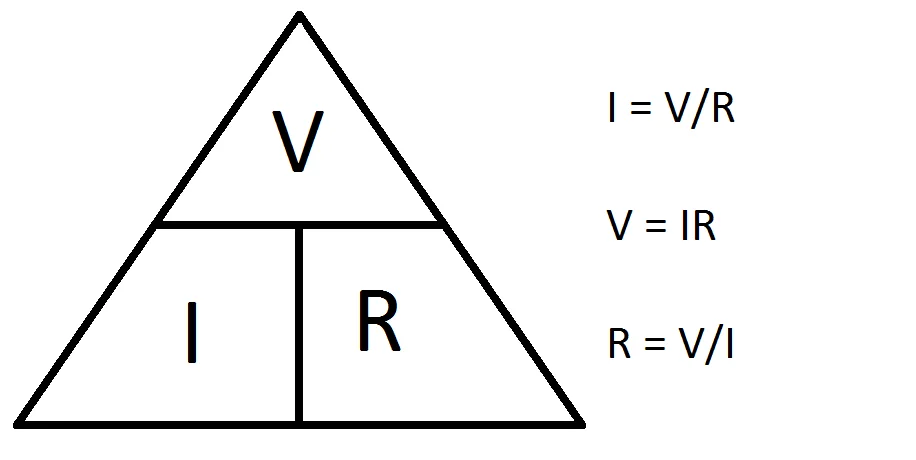
So far the first shot of this experiment was looking good. But since this is AI (aka Lord of Deception) we’re dealing with, I wanted to make sure it didn't just hallucinate a bunch of circuitry, or sneak in some nefarious burn-your-board wiring. So before moving forward with actually trying to wire up this plan, I had to take Fable’s plan through the gauntlet: lots of manual checking and also grilling with adversarial AIs in order to find where it may have broken any of those pesky laws of physics, and make sure that this circuit design is something that would actually work. After some back and forth and running a few Ohm’s Law checks, I got to the point where I was feeling very good about the schematic. It was able to justify the layout, the components, and the math behind everything to ensure that I was electrically correct and possible within the project box.
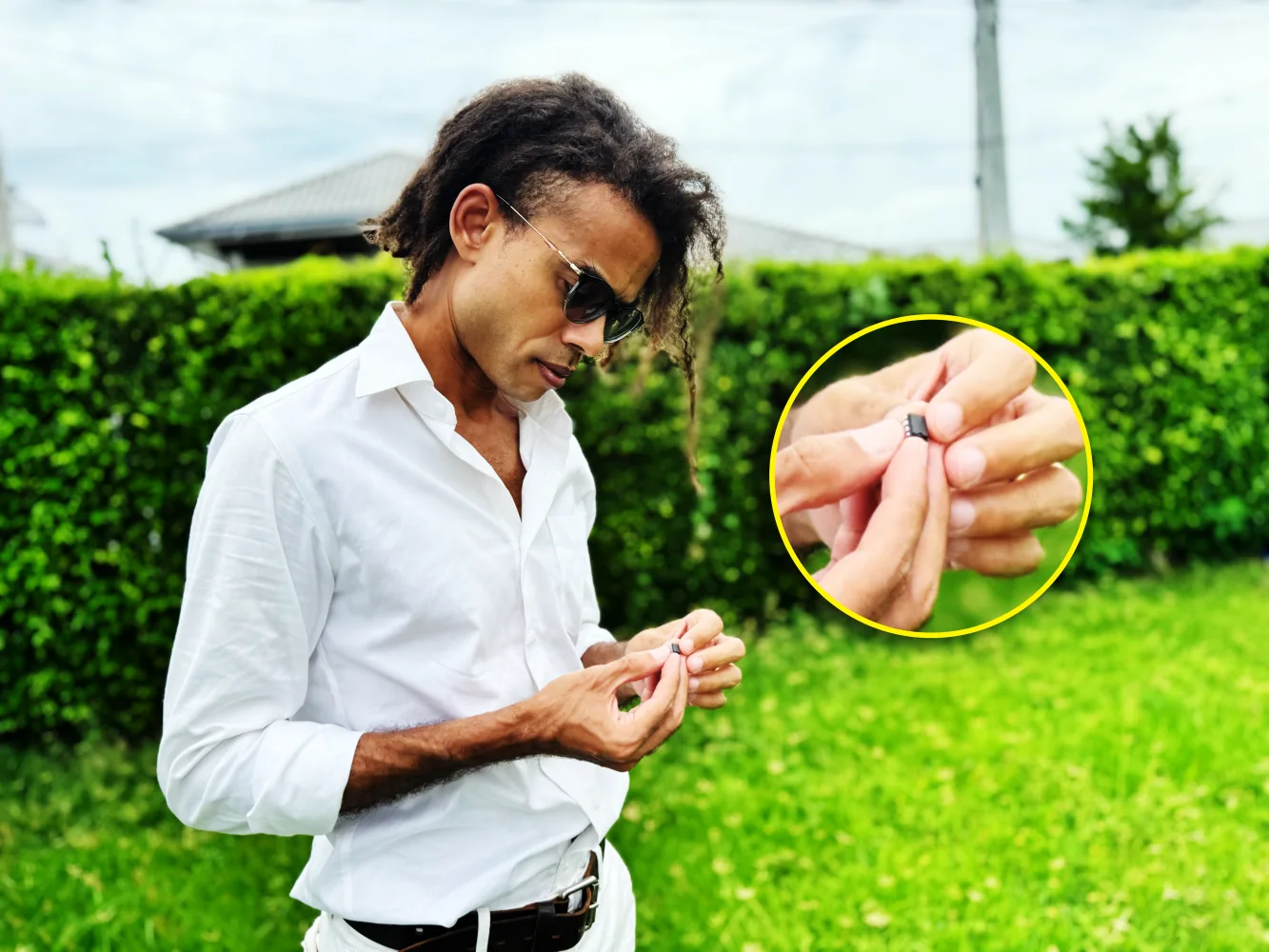
So we were off to the races. It was time to get this thing soldered up. “Finally!” This was my favorite part. I get to weld stuff with liquid metal. Did I mention I enjoy soldering? There’s really just not enough opportunities in the day for me to solder things (if you want me to solder you something, feel free to shoot me a DM). Armed with my perf board, my soldering iron, my 60/40 solder core (not that lead-free stuff that barely works) I was ready to go.

As mentioned, I could have done this without soldering anything, just doing this on a breadboard. But I really wanted something that could fit nicely in a relatively compact circuit board, something that was soldered together and could be somewhat durable, and that could pack into a project box nicely with some LEDs mounted to the box. A breadboard is ultimately too clumsy, and the amount of parts needed for this can easily fit in a project box.
I started assembling the circuit board and already a few hardware smells started to emerge. You know when you’re reviewing code, and you start seeing some suspicious code decisions, and your spidey sense starts tingling? I was experiencing the hardware equivalent of that. Up to this point, a lot of this project was just laying down rails, wiring, and making sure power is being routed around properly. Fable's designs were rather meticulous, clever, and tightly designed, almost as if being designed by an alien intelligence...with infinitesimally thin fingers.
Fast forward to the end. I've already spent several (largely gratuitous) hours soldering rails and wiring components together. It was time to put in the final set of insulated wiring, only to realize something that in retrospect should’ve been more obvious: Fable had designed something that clearly wasn’t made with human hands in mind. Despite having provided it the project box and perf board dimensions, it appeared to have struggled with conceptualizing the physicality of the human operator’s body, and how that intersects with the three-dimensional volume of all the components. Additionally, it was clear that its recommended order-of-operations for successfully inserting human fingers into this pasta bowl of circuitry to solder millimeter-sized targets was dubious at best. For example, to take a wire and solder it from one endpoint to another, you assume a certain amount of length, not only to cover the distance, but to have enough slack to allow for the soldering itself and final adjustments. It was notoriously bad at coming up with correct lengths for wires (not a huge deal, I could adjust on-the-fly). There were also space considerations for how far off the board you want it to be and how close to the lid you want it to be. Even with access to the dimensions of the project box, the perf board, and all of the components, what I was left with was something that no longer became conducive to being modified by human hands. So while the design did work , it was very difficult and time-consuming to put together
This mid-wiring realization made me think of a classic story from Apple folklore, where Woz is helping Jobs optimize the architecture of one of Atari's machines and trying to get it down to a certain amount of parts. Something dawned on me which I hadn’t appreciated before. It's not just that Woz was able to do it in fewer parts (which in and of itself is a great achievement) but that the optimization itself was designed in such a way that makes sense to a human mind. You can show it to another human, they repeat the results, they explain it to other humans, and now a team of humans can collaborate on it and extend it going forward. We’ve long passed the era where the internal circuitry of computer chips are conceivable with the naked eye, but in that era, in the dawn of home computing, that intuitive connection between hardware design and human understanding of the world was crucial. So while Fable was able to give me a design for a circuit board that did exactly what I asked it to do, and technically it worked — boy did it design it in the most inconvenient, time-consuming, hasn’t-spent-a-day-as-a-human kind of way.
Okay, who cares? Does it matter how it works as long as it works? The second you want to modify it to have it do something else, that's when you pay the technical debt of it not being intuitive. This is interesting because this is the same phenomenon we see on the software side of things. It's pretty easy to give Claude or Codex a product spec, a set of requirements, and acceptance criteria, and tell it to just have at it until it works, and you'll get something that works. It can pass tests, it can run, and you might even be compelled to let it loose in production. That’s great, until there's a slight change you want. You want it to handle a new use case. You want it to handle a new endpoint. You want to support a different authentication model. If you set off to do it relying on your own agency, that's when you'll most likely realize that while it achieved what it was required to achieve, it didn’t do it in a way that matches any of your intuitions for how it should be laid out. Now the cost is in making sense out of this alien landscape that's been laid out. That cost eats away at the costs that were saved in the initial one-shotting that got you all this. If you only need something once and you don't ever need to change it, well, great. Plenty of throwaway demos fit that criteria. If you're building for long-term value, chances are you're going to need to make changes, and that's when you run into this toll bridge. So it's interesting to see that this problem exists in the physical space as well, because granted, I could have been more explicit in terms of how I went about speccing out the requirements for the project to account for the dimensions of my own hands, and I could have gotten around these design intuition problems by laying more and more guardrails, but at a certain point that’s also more work than just designing a simple circuit myself. It seems there might be a universal rule emerging for handling LLM output: what you don’t pay in tightly-constrained guardrails, you will pay in lost intuition. This practice is well understood in the emerging field of agentic programming, and my suspicion is that it extends to agentic engineering more broadly as well.
So what does this have to do with world models and with LeCun being right? If we look at Yann LeCun, he has an interesting story. On one hand, he's one of the godfathers of AI and neural networks. On the other hand, he was hired by Meta after Meta decided to go all in on LLMs and AI. LeCun then left Meta, presumably due to not agreeing with their technical strategy on AI. Rumors suggest it boiled down to his opinion that scaling up LLMs alone isn't going to get us to the Promised Land of AGI due to their lack of understanding of the world, and that LLMs would have trouble making that final leap without an accompanying world model. His proposed Joint Embedding Predictive Architectures (JEPA) approach addresses precisely this (Link: https://arxiv.org/abs/2603.19312). With JEPA, LLMs get access to a latent space that represents the state of the world more abstractly, enabling it to effectively predict the state of the world in those abstract terms in a way that's more meaningful than just predicting the next token or pixel. Curiously enough, there hasn't been as much widespread attention for LeCun's world-based model, even though several other pioneering researchers in the space such as Fei-Fei Li of World Labs, have also taken interest in this approach. Others agree that at its core, the JEPA concept holds up and that understanding the world should be part of the architecture of how we generate output. Otherwise, our output is fundamentally limited in a way it can't scale itself out of. For example, can a model truly understand what it means to be under something if it doesn't have spatial awareness? Is describing occlusion functionally the same as being occluded? Sure, it can read or write phrases like “under this” or “over that”, but can it perceive a given environment and know if it is under or over something without relying on a string of tokens or pixels to inform it of such? Can it look at a project box and a clump of wires and understand what it the best way to organize it for manipulation by human-sized hands? Can it do this in a way that appears intuitive, or will it need a lot of spoon-feeding of additional tokens to help fill the gaps in its limited understanding? What if enough of this understanding was in the foundation of the model architecture, suitable to allow for emergent intuition of how a given environment works? Could you then place it in arbitrary scenarios and it would know how to behave in reasonable ways that get good results most of the time?
Seeing an intelligent model like Fable fumble when unleashed in a physical problem space could be evidence to LeCun's hypothesis that a world model is needed. I don't know the answer one way or the other, but it does indeed feel like a model with a more intuitive understanding of the three-dimensional world would yield better results. Whether it’s JEPA or something else, I do strongly believe that LLMs are just the first major stop on a long trajectory of generative technologies. I hope to experiment more with this hypothesis going forward. In the meantime, I'll stay tuned to what Fei-Fei and LeCun come up with.
Originally published on LinkedIn.