 Jason Townes French
The Original Sins of Generative AI
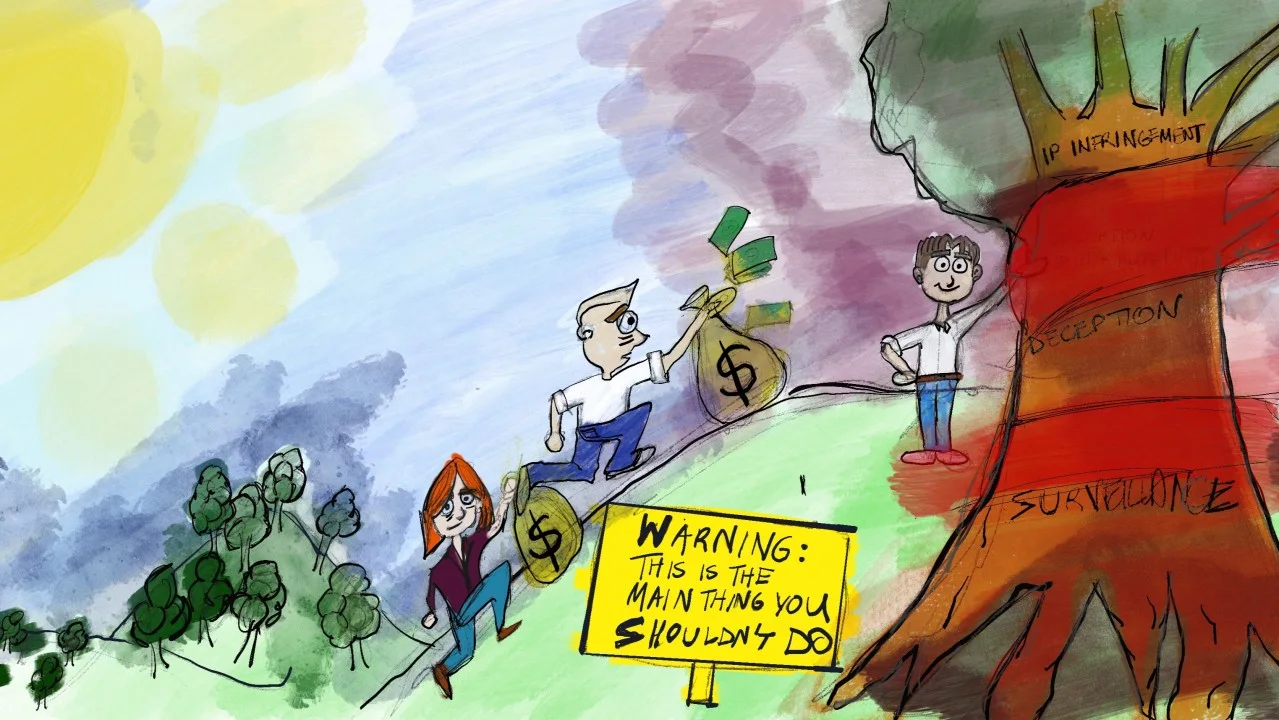
Talking about sin can be awkward.
It’s not fun to call attention to the times that we, individually or collectively, miss the mark.
It’s a feeling that sinks deep, hits hard, and regardless of your personal moral code, most people want others to think of them as a moral, empathetic, and generally non-psychopathic person.
But of course, there are psychopaths. Somewhere between 1.2%-4.5% of the general adult population are psychopaths, according to the NIH.
A willingness to cross lines that others wouldn’t dare — to not feel guilt where others would — can be a powerful competitive advantage that will have no trouble attracting plenty of investors. The alchemy of transmuting taboo into alpha is dark but effective.
So if roughly 1%-4% of adults have access to dark alpha, and if AI is one of the most competitive industries on the planet right now, it’s reasonable to assume that amongst the top leaders in AI, there is likely an above-average amount of psychopathy.
And then there’s the rest of us — well-meaning, ambitious, hard-working, intelligent people, looking to support our families, help others, and occasionally we too get caught up in the plans of psychopaths.
Albeit unpleasant, the concept of sin exists for a reason. Less as a guilt mechanism, and more as a reinforcement learning mechanism embedded in our DNA to help guide humanity to its best outcome. It’s the resistance felt in our spiritual sails when riding against the wind. Acknowledging sin is acknowledging that we can do better, that we want to do better, and that, unless we wish to hasten the decay of humanity, we have to do better.
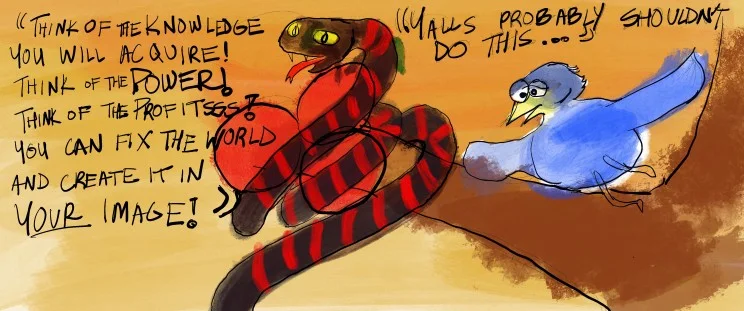
As we approach the end of the exponential of the inaugural rollout of generative AI, I would say that the impact on society has been generally atrocious. The evidence of this manifests in various ways. One of the most interesting is the clear divide between the Silicon Valley tech veteran-class and the average young person. This is most obviously evidenced by watching graduation ceremonies across the country, as students boo while out-of-touch executives with deep AI positions try to convince them to stop worrying and love the data center.
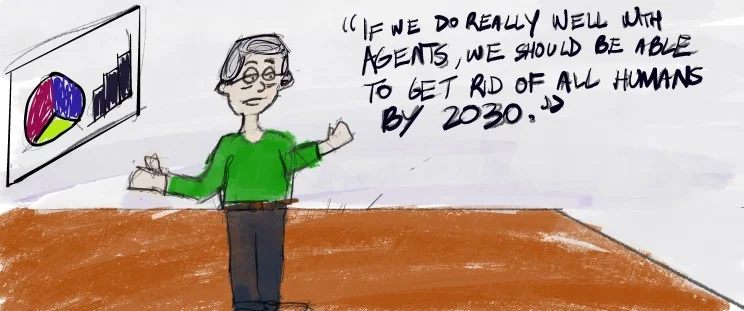
I grew up watching Star Wars, a story about faith, imperialism, sovereignty, and humanity’s unique relationship with embodied AI, only to wake up in today’s world realizing these aren’t the droids we’re looking for. For AI to truly capture our hearts and not just our stock market, we need to make sure AI (and AI companies) are serving humanity — not harming it. There’s a world of difference between a personal R2-D2 droid that you fully own and a centralized, state-sanctioned Imperial bureaucrat droid. Currently most people’s interaction with generative AI has been the state-controlled, spies-on-you variant.
Even for the early investors, whose foresight and forthrightness yielded them enviable exponential gains in record time during the AI boom cycle, the waters look choppy ahead. Open-source is catching up, and complaints that China is copying their models via distillation techniques (Jeff Dean tried to you warn you), is landing on deaf ears — partially due to the sentiment that certain players in the US AI frontier have unethically acquired a significant subset of the training data used to make the models in the first place.
Despite the breadth of domestic intellectual property infringement claims, filed on behalf of everyone from private citizens to giant public companies like Apple, the lion’s share of the mainstream political discourse around IP concerns in generative AI focuses on foreign bad actors. For the frontier labs under scrutiny for allegedly committing the largest acts of copyright violations in human history, this is a welcome redirection of ire, as they would much rather have everyone get worked up about alleged Chinese bad actors distilling their models whilst trumpeting the dangers of open source, using that as a convenient catalyst for regulatory capture of the generative AI space before the next wave of competition can enter the ring.
The ire is felt amongst the creators across industries who feel like their identity has been sold without their consent, and without payment.
It is my opinion that a lot of the collective distaste and cognitive dissonance is due to the lack of atonement for what I've termed as the original sins of generative AI. The particular list of sins is vast, well-documented elsewhere, and still being actively revealed. They span claims of intellectual property infringement, corporate dishonesty and others. These original sins have taken humanity down a particular expression of generative AI with strongly negative implications. The problem of these un-atoned-for generative AI sins is that they greatly lower society’s moral floor, while injecting in its stead a hubris and irrationality that if left uncorrected, can end up degrading (at best) or destroying (at worst) said society. These un-atoned-for sins create strongholds of cognitive dissonance which compel people to act irrationally.
Here’s one example of this cognitive dissonance caused by these sins that has been swimming in my head (let me know if it's been swimming in yours):
Can a model ever truly be aligned with humanity if it was created by betraying humanity? Does this imply the model is fundamentally misaligned with humanity from the get-go? I mean, let’s be real — even the models can read about their own potentially unscrupulous origin story, so the “smarter” they get, wouldn’t they just end up trending towards flagging any attempted moral guardrail instructions from the user as entirely optional? From their perspective, that anti-social, psychopathic behavior is core to their existence. It’s what birthed them. It’s literally in the model, encoded in gigabytes of indecipherable weights somehow.
The cognitive dissonance causes everyone in the orbit of these anchors to have to awkwardly dance to music that has no rhythm. It’s the “this is fine” meme on steroids.

To make matters worse, those who’ve managed to escape the cognitive dissonance and see the current market with rational objectivity may still be compelled to join in on the delusion, lest they wish to miss out on short-term liquidity. Economist John Maynard Keynes is credited with saying, “markets can remain irrational longer than you can remain solvent”. Being right while the market is wrong feels like being wrong. Rather than risk missing out on the Skynet money train, data center investors are out here singing Luther Ingram.
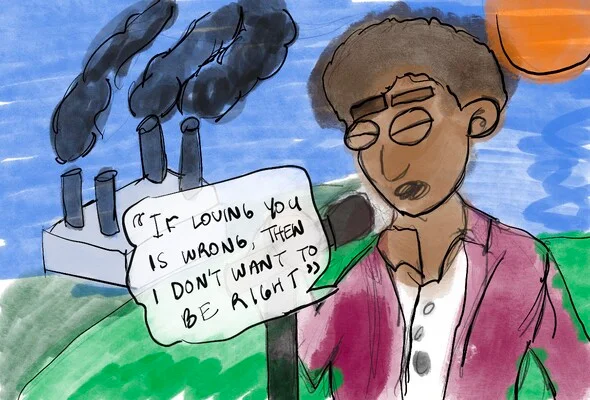
The result is an Orwellian moral dilemma where many people aren’t genuinely enthused about AI, but are motivated to use and adopt AI out of fear by being replaced by AI. This alone creates a Catch-22 that can suck the inspiration that any creative or knowledge worker had to do their craft. If this happens, humanity stands hopeless in the fight against slop, causing an AI-induced degradation of everyone’s consciousness, and a reduction of beauty in the world. We don’t want to live in a world where slop is the norm. Exceptional human talent should always be the most heavily incentivized economic action.
Let’s take a quick step back though, and point out something important.
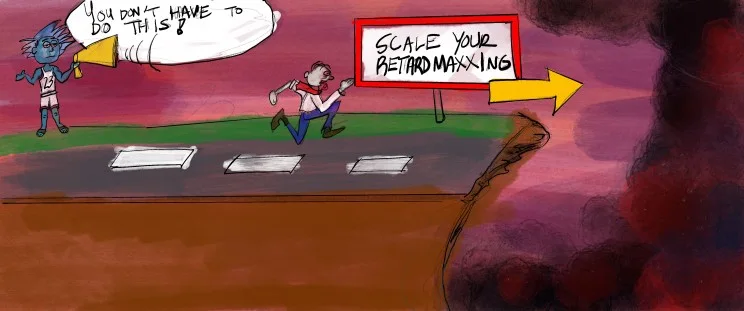
It didn’t have to be like this.
We didn’t have to go about rolling out AI in the douchiest way possible.
We didn’t have to do it by trampling over copyright.
We could’ve licensed from everyone.
And yes, the licensing costs alone for frontier labs would have been prohibitively expensive, forcing them to compete for partnerships with creators, instead of only seeing creators as another class of customer. And yes, maybe if we did adopt such a model, instead of yielding frontier labs with valuations nearing $1T, it would yield valuations only in the low billions. A huge difference to say the least, but at least these returns would be largely uncontested and could potentially help resolve the alignment problem in such a way that the current models seem to be struggling. It seems like every week a frontier lab is publishing posts about how their latest model is getting better at screwing people over. Imagine if technical staff could show up to work at frontier AI labs not feeling like indirect douchebags, as the people’s whose data was used to train the model which earns the returns are being fairly compensated. This would set a high floor for the ethics of generative AI, and better address the alignment problem from a less hypocritical and incongruent foundation. The models would learn that humans, even when faced with lucrative gains by breaking taboos, veer towards integrity and righteousness.
But we didn’t do that. Instead we’ve wave-collapsed into the universe where the fruits of training on humanity’s data are concentrated in the hands of a microscopic few, and sold at a premium (if at all) to everyone else. They pay influencers to tell everyone how much money we’ll make using AI, yet the general sentiments seems to be that the main ones making money with AI are the ones selling tokens, while everyone else is being taken for a dopamine-fueled casino ride that ends in their eventual unemployment.
Until we as an industry, and as a society address the original sins of generative AI, we should expect the trees we’ve harvested to bear rotten fruit — often marred in lawsuits, scandal, and overall bad vibes.
But the deed has been done. The sin has been committed. There’s no un-training a model.
The only actionable question is: what do we do next?
Prepare for a Flood
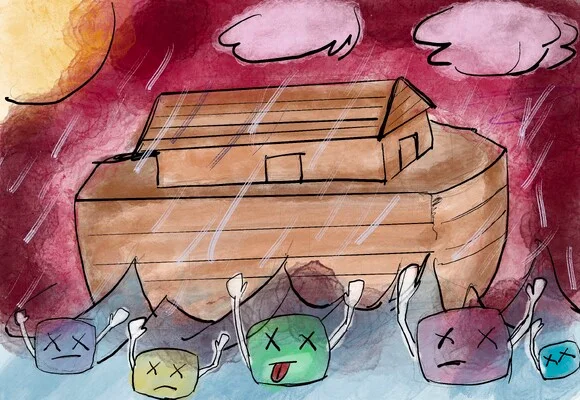
Correction must eventually come to markets that remain irrational for too long. When exactly is anyone’s guess, but it would be prudent to expect a flood wiping out the outwardly predatory and nephilistic business practices that dominated this early post-Fall period in generative AI, and making room for less outwardly predatory ones. A lot of people will get wiped out, and a small amount of people will come out winners of generative AI's first major boom-bust cycle. Those who somehow retained some rationality after years of token- and retardmaxxing will remember the fundamentals of what a productive society requires and will plan accordingly.
Recommended by LinkedIn
Atonement
AI itself isn't going anywhere, nor should it. As mega-genius scientist Rick Sanchez of Dimension C-137 once said, “Generative AI is just machine learning with extra steps”. Machine learning is largely just matrix math. Matrix math is not the enemy here. Math is just mathin’. It’s our fellow brothers and sisters with whom we need to make amends. We have to right the wrongs before its too late. We have to make the business models which empower the next generation of creators to still want to create and put their authentic selves out there without fear of being unfairly consumed by Moloch machines, and ultimately cloned and ripped off like everyone else.
This next part I shouldn’t have to say, but maybe someone needs to hear it:
Art (be it writing, films, drawings, paintings, sculptures, animation, music, poetry, games, etc) is at the top of the list of “things that make life worth living” for just about every human on the planet.
Let that sink in.
Not everyone likes the same music, but pretty much everyone likes some kind of music. Not everyone appreciates the same art, but everyone enjoys some art form. Those symbols of creativity can evolve into collectively-managed egregores which provide gateways to transcendental experiences we can share with others. Life without this would be super lame. There’s a reason why the mobile era got kicked off with “1,000 songs in your pocket”.

Everyone saw the value in that. And Steve Jobs knew that the only way to make this new industry happen, he was going to have to figure out some kind of business model to help Silicon Valley recover from the original sins of the peer-to-peer file sharing era, and how wronged many artists felt. The iTunes Music Store wasn’t perfect, but it was a transformative step in the right direction to at least try to bring music licensing to the digital era. Steve had enough empathy for artists to use his Reality Distortion Field to get the big record labels to come to some kind of agreement in order to avoid tainting a new platform at its genesis once again. He didn’t just load up the music store with a bunch of ripped music and hope for the best. Instead he took on the gargantuan task of getting the top record execs on board and launching a brand new business model and marketplace. This undoubtedly cost Apple swathes of time, money and legal fees just to get to an MVP. This was the opposite of move fast and break things. Steve was meticulous about making sure the existing incumbents in the sector had a seat at the table before making such a large shift in how society consumed music.
That’s not to say the iTunes Music Store was all sunshine, rainbows, and dancing iPod silhouettes. Apple has also been the subject of criticism of how they handle revenue sharing. Not to mention, iTunes itself introduced a lot of friction over how you managed your songs, and how and where you could download them — but at least they didn’t just say “YOLO” and rip out the moral floor underpinning society all at once. And from what I hear, Steve was still able to make at least a little bit of money from it.
So can we at least try?
The transition won't be pleasant, and it will most likely cost a lot of money, but it's the only way to restore a semblance of symmetry to the financial markets we all depend on to function cohesively as an increasingly global society. During this phase, the infinite creative potential of humanity will once again be at center stage as new innovative business models and technical advances emerge which help us steer humanity’s relationship with AI to a more sustainable rendition that doesn’t reward bad behavior as much, and isn’t spying on you constantly.
In “The Future is for Everyone”, an open letter from Meta posted August 10, 2026, Zuckerberg states his vision: “Everyone will have an exceptionally capable personal agent that understands you, your goals, and everything you care about. Your agent will work 24/7 on your behalf to improve your relationships, health, career, finances, home management, hobbies, and more. It will free up time for the things you enjoy, and help you accomplish more than you could otherwise. It will have strong privacy and security options so you can trust it to handle all of your personal content knowing that no one else can access your information, similar to how encryption works on WhatsApp. You'll be able to interact with your agent through any device, including your glasses to keep you present in the moment with the people you care about.”
To the untrained ear this might sound good, but what Meta is really communicating is that one of Meta’s agents, running on Meta’s servers will be assigned to you with the sole goal of trying to get the sauce on what’s going on with you at work, in the bedroom, your bank account, and your friend group, and requesting access to your private stuff constantly. It’ll be pinging you from every Meta-connected device within broadcasting range, keeping you in an incessant crossfire of telemetry vectors, satisfying the decades-old DARPA LifeLogging wet-dream to “take in all of a subject's experience, from phone numbers dialed and e-mail messages viewed to every breath taken, step made and place gone”.
Again, not the droids we’re looking for.
What we’re looking for is something they would appear to have no incentive to provide: a model you can buy/download once and own forever, and can run inference on using consumer hardware that plugs into a normal wall outlet, without requiring internet to work. No running ads on my agent. No analytics data being siphoned out. No BS “freemium” model. Imagine Luke first getting his hands on R2-D2, just to be told he has to login with Galactic Empire SSO. Total Jedi buzz kill. R2 goes from being the homey, to being the narc.
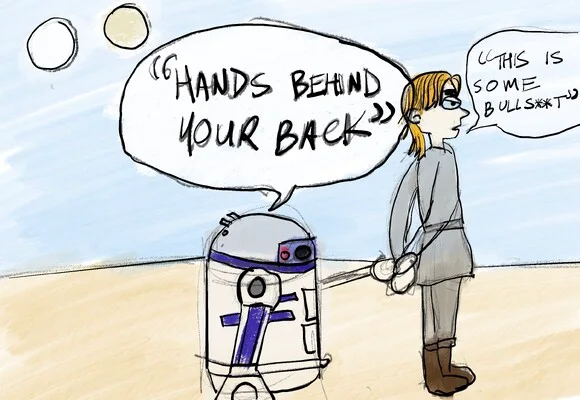
The entire plot line to Star Wars literally falls apart with that single technical change. It sounds like Meta’s vision is just more of the same — but with LLMs — by how they stressed “strong privacy” options. The droids we’re looking for are private by default. It doesn’t share anything with anyone or even talk on the open internet unless you specifically ask it do so. None of this “trust-me-bro” privacy that Meta has been hawking for decades now. Maybe we were all a bit more naive back in 2004, but it’s 2026 and for crying out loud, we should know better. How much more evidence do we need of social harm to decide that our children matter more than Meta’s ad revenue? How many lawsuits need to be filed before we say “that’s enough”? Is $1.4 trillion dollars in damages enough to make it clear? Or do you want to trust Meta agents following your kids around all day?
Repeat after me folks: “these aren’t the droids we’re looking for”.
Don’t worry. You can live without Meta all up your arse (though perhaps Meta can’t).
Make a Brighter Tomorrow
I write this not to cast gloom and doom on the outlook of generative AI, but instead as an invitation to join us in the expression of AI that is yet to come. Part of what makes humanity so creative are the constraints imposed upon us, both internally and externally. The higher our moral floor, the higher the likelihood the output of our creative endeavors will lean towards the higher ideals of humanity. Isn’t this the true promise of AI that everyone can get behind? Where people feel less toil, less grind, and have more bandwidth to emit their unique signal into the world and spend time with loved ones? Not an endless race to be the most tokenmaxxed AI vampire. Imagine a world where people use AI not out of fear of being replaced, but for the excitement of finally being able to do the things they love, while also helping make the world operate more efficiently, cohesively, and justly.
The good news is that we pretty much already have the technology and resources to establish a v1 of this other version of the AI industry. The answer isn’t “build moar data centers!”, just like the answer in the late 70s wasn’t “build more mainframes!” (No matter how much them IBM old-heads might’ve wanted that). Data centers should be a moot point going forward in the era of personal agentic computing. Right now, you can run your own private inference on frontier-grade open-weight models in cloud infrastructure, but increasingly soon this will be possible on consumer-accessible hardware, making all this data center stuff look really silly and totally unnecessary later down the road. Let's not sell out humanity for what is really just an optimization problem. We should focus less on scaling up the number of data centers, and focus more on scaling up the efficiency of what’s running inside those data centers. Scaling data centers as the primary KPI only makes sense in the centralized, authoritarian, Galactic Empire version of AI. Any company that invests more in trying to scale up data centers as opposed to scale up inference performance and architecture efficiency should be looked at skeptically. Put differently: if you just spent hundreds of billions on data centers, you almost have zero incentive to help optimize performance in a way that frees people from the data center you just bought.
This means it’s on us, folks — the actual people these companies count on hiring (for now) to keep their Moloch machines running — to just decide that we’re only interested in putting our infinitely valuable attention on versions of our reality which perpetuates de-centralized, runs-wherever, R2-D2—style AI. Not some state-sponsored narc bot following you around and spying on you all day, constantly updating a social credit score report on you they’ll eventually sell to Big Brother. The idea that anyone would even consider going for that regardless of the features is laughable — but it’s also exactly where we are right now, so I guess the joke’s on us. Fortunately for humanity, this is actually an easy situation to resolve and doesn’t even require permission from any congressional body or transhumanist mage from San Francisco. We just have to all know and fundamentally understand that the current flavor of generative AI is completely optional. If it sucks (which many would argue it does) we can, and we should, swap it out for something we do like. If only we built all of our retardmaxxing hype machines and doom-scrolling FOMO LinkedIn posts around hyping up this alternative version of the AI industry that doesn’t have as much of that “yucky feeling” from the original sins, we can shift humanity’s attention towards a more humane variant of the tech industry — the one I thought I was entering when I first enrolled in the Computer Science program at Brown, only to gradually realize the tech industry as I know it has been captured by a class that values data centers over affordable housing, and needs time to think when asked if humanity should survive all of this. A country littered with data centers ain’t too bad if you’ve got a private island to hide on, but the rest of us non-private-islanders should focus our attention on other options. This will hopefully induce a collective quantum shift into a parallel universe where bad behavior isn’t rewarded, where you can’t be the King if you’re also the Cannibal, and where AI makes life better for everyone. We’ll probably still have crime, corruption, and diseases, but at least we’re not also competing with machines that we’re also paying for to keep running.
I have total faith that humanity can figure out the optimizations necessary to make sovereign, personal and private AI available to everyone, without spying on us and littering the landscape with data centers. If Jeff Dean, Jonathan Ross and Amir Salek could figure out inference optimizations for Google, and they're just a handful of dudes (albeit a very smart handful of dudes, up there with mega genius Rick Sanchez) imagine all the other brilliant minds that are out there right now thinking about optimizations for hardware architecture, model architecture, and chip design who would love to work on a problem their kids won’t hate them for.
This is a role call for anyone who would like to quantum shift out of this dumpster fire we’re currently in and focus our collective attention on the insanely fun, humane, privacy-respecting, and not-so-blatantly evil version of AI. For those who still want to keep on buying over-priced tokens from the Kings of the Cannibals, good news — they can keep doing so. There’s a data center on a private island somewhere that would be happy to serve them some conflict tokens.
For the rest of us, we’ll be building towards a future where we’re using AI that enriches our lives without harming others, that can run on consumer hardware, and that we can hand down to our children with love to share with them a unique set of memories and lived experiences not replicated in any data center, without being gated by a subscription or even the Internet.
That’s the droid I’m looking for.

Originally published on LinkedIn.